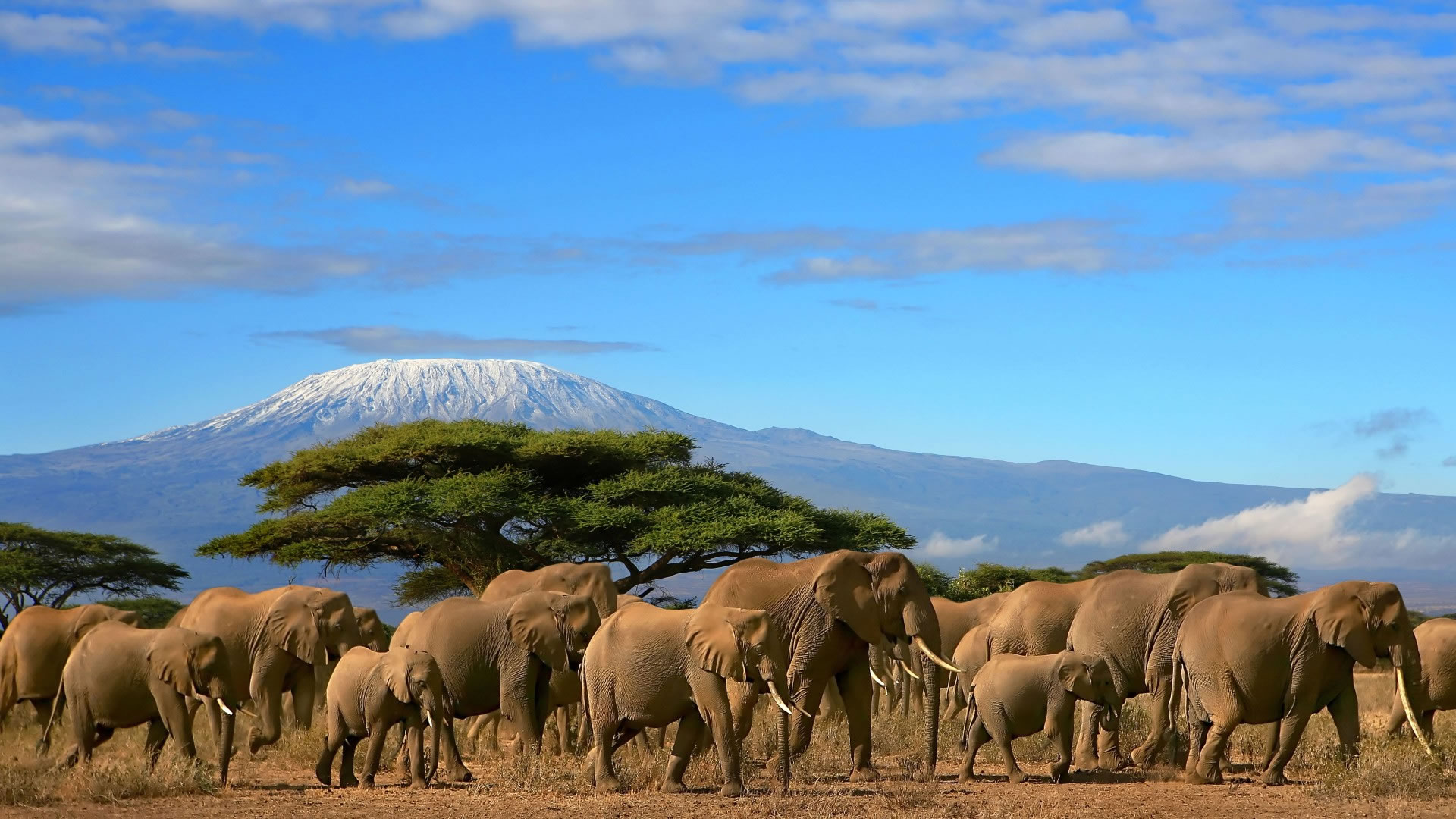
Everyone knows elephants are big, smart, and have great memories. But the deeper facts about African elephants — how they grieve, how they communicate, how long their family bonds actually last — are far stranger and more moving than the trivia-night version. And there's nowhere on Earth better to witness these facts in person than Amboseli National Park, home to the longest-running elephant study in the world.
Here are 15 facts worth knowing before your next safari.
1. Amboseli's Elephants Are the Most Studied Family Group on the Planet Since 1972, researchers with the Amboseli Trust for Elephants have tracked individual elephants by name, family line, and generation — continuously, for over 50 years. It's the longest-running study of a wild elephant population anywhere in the world, which means when your guide points at a herd, they're not gesturing at "some elephants." They can often tell you exactly which matriarch is leading, her family history, and which young bulls are testing independence at the edge of the group.
2. Elephant Families Are Led by a Matriarch — Usually the Oldest Female Elephant society is matriarchal. Herds are led by the oldest, most experienced female, who carries decades of accumulated knowledge — where to find water in a drought, which routes are safe, how to respond to a threat. When a matriarch dies, that knowledge doesn't automatically pass on, which is part of why losing older elephants has an outsized impact on a herd's survival.
3. Amboseli Is Home to Some of Africa's Last "Super Tuskers" A super tusker is a bull elephant whose tusks each weigh more than 100 pounds — genetics that were once far more common across Africa before decades of ivory poaching removed most of them from the gene pool. As of 2026, Kenya holds an estimated 15 to 20 super tuskers left in the wild, and several of the most photographed live in and around Amboseli.
4. They Communicate in Sound Humans Can't Hear Elephants produce low-frequency rumbles — infrasound — that travel through the ground and air over several kilometers, well below the range of human hearing. Other elephants detect these vibrations partly through sensitive nerve endings in their feet, allowing separated family members to stay in contact across surprising distances.
5. An Elephant's Trunk Has No Bones — and Over 40,000 Muscles The trunk is one of the most dexterous organs in the animal kingdom: strong enough to uproot a small tree, precise enough to pluck a single blade of grass. It's used for breathing, smelling, drinking, grasping, and even as a snorkel when crossing deep water.
6. Amboseli's Elephants Get Their Water from Kilimanjaro — Not Local Rainfall Amboseli receives relatively little rainfall, yet it supports one of Africa's densest elephant populations. The reason is underground: snowmelt from Kilimanjaro filters through volcanic rock and resurfaces in Amboseli's permanent swamps, giving elephants reliable water even in dry years — one of the reasons sightings here are so consistent year-round.
7. Elephants Mourn Their Dead Elephants are one of the few non-human species known to show behavior resembling grief — lingering near a deceased herd member, touching the bones with their trunks, and sometimes returning to the same site repeatedly over time. Researchers still debate exactly what this behavior means, but its consistency across elephant populations is well documented.
8. A Female Elephant's Pregnancy Lasts Almost Two Years At around 22 months, the elephant gestation period is the longest of any land mammal — part of why calves are born so developmentally advanced, often able to stand and walk within hours of birth.
9. Kenya's Elephant Population Has More Than Doubled Since the 1980s Kenya's national wildlife census counted 36,280 elephants in its most recent count, up from a low of around 16,000 in 1989. That recovery is the direct result of the 1989 international ivory trade ban, sustained Kenya Wildlife Service anti-poaching work, and the growth of community conservancies — one of the continent's clearest conservation success stories.
10. Amboseli's Population Still Faces Real Threats The recovery story isn't finished. Amboseli's elephant numbers, now estimated at roughly 1,600–1,900 individuals, have fluctuated with severe droughts — the 2009 drought alone killed close to 400 elephants in Amboseli, and 2022's drought killed 76 more locally. Trophy hunting pressure across the Tanzanian border has also renewed concern for a population that had been protected by a 30-year moratorium. Every visit and conservation fee paid at Amboseli contributes directly to the ongoing protection effort.
11. Elephants Have Individual Personalities Researchers Can Identify Decades of individual tracking in Amboseli have shown that elephants have consistent, identifiable temperaments — some bold and curious, others cautious and slow to approach vehicles. This isn't anthropomorphizing; it's a documented pattern across the study population.
12. Their Ears Do More Than Hear An African elephant's large, thin ears are laced with blood vessels that help regulate body temperature — flapping them cools the blood before it recirculates, acting as a built-in cooling system in hot savanna conditions.
13. Bulls Leave the Family Herd — But Don't Go It Entirely Alone Around age 12–15, young males leave their birth family and often join loose "bachelor groups" with other males, sometimes led by an older, more experienced bull who helps younger males learn social behavior — including when to challenge and when to back down.
14. Amboseli's Elephants Cross an International Border The Amboseli elephant population isn't confined to the park — it ranges across an ecosystem of roughly 8,000 km², including conservancy lands in Kenya and the Enduimet Wildlife Management Area in Tanzania. Around 17 of Amboseli's 63 known elephant families regularly spend time on both sides of the border, which is part of why cross-border conservation cooperation matters so much to their survival.
15. Amboseli Offers the Best Odds of Seeing a Super Tusker in the Wild Because the herds here are so habituated to vehicles and so intensively monitored, Amboseli offers some of the most reliable, close-range elephant sightings anywhere in Africa — set against the added backdrop of Mount Kilimanjaro on a clear morning. See These Facts Come to Life
Reading about elephants is one thing. Watching a multi-generational family cross an open plain with Kilimanjaro rising behind them — while your guide identifies individual matriarchs by name is another entirely. Browse our Amboseli safari or contact info@wildaxistours.com to plan a trip built around Africa's most remarkable elephant population.
Frequently Asked Questions
How many elephants live in Amboseli National Park?
Current estimates put the Amboseli ecosystem's elephant population at roughly 1,600–1,900 individuals, though it fluctuates seasonally as elephants range across the wider cross-border ecosystem.
What is a "super tusker" elephant? A super tusker is a bull elephant with tusks that each weigh over 100 pounds — a genetic trait now rare after decades of ivory poaching. Kenya is estimated to hold only 15–20 super tuskers as of 2026, several of which live in Amboseli.
Why are there so many elephants in Amboseli despite low rainfall? Amboseli's swamps are fed by underground snowmelt from Mount Kilimanjaro, providing a reliable water source even in dry years, which supports one of Africa's densest elephant populations. Is Amboseli elephant research still ongoing? Yes. The Amboseli Trust for Elephants has continuously monitored individual elephants since 1972, making it the longest-running study of a wild elephant population in the world.